


By Stacey Dorsey (MAD)
Everyone complains about the “New Outlook” feeling clunky, sluggish, or missing their favorite right-click menu. Then it started to fail and now we act like Microsoft woke up one morning and decided to ruin their workflow for fun.
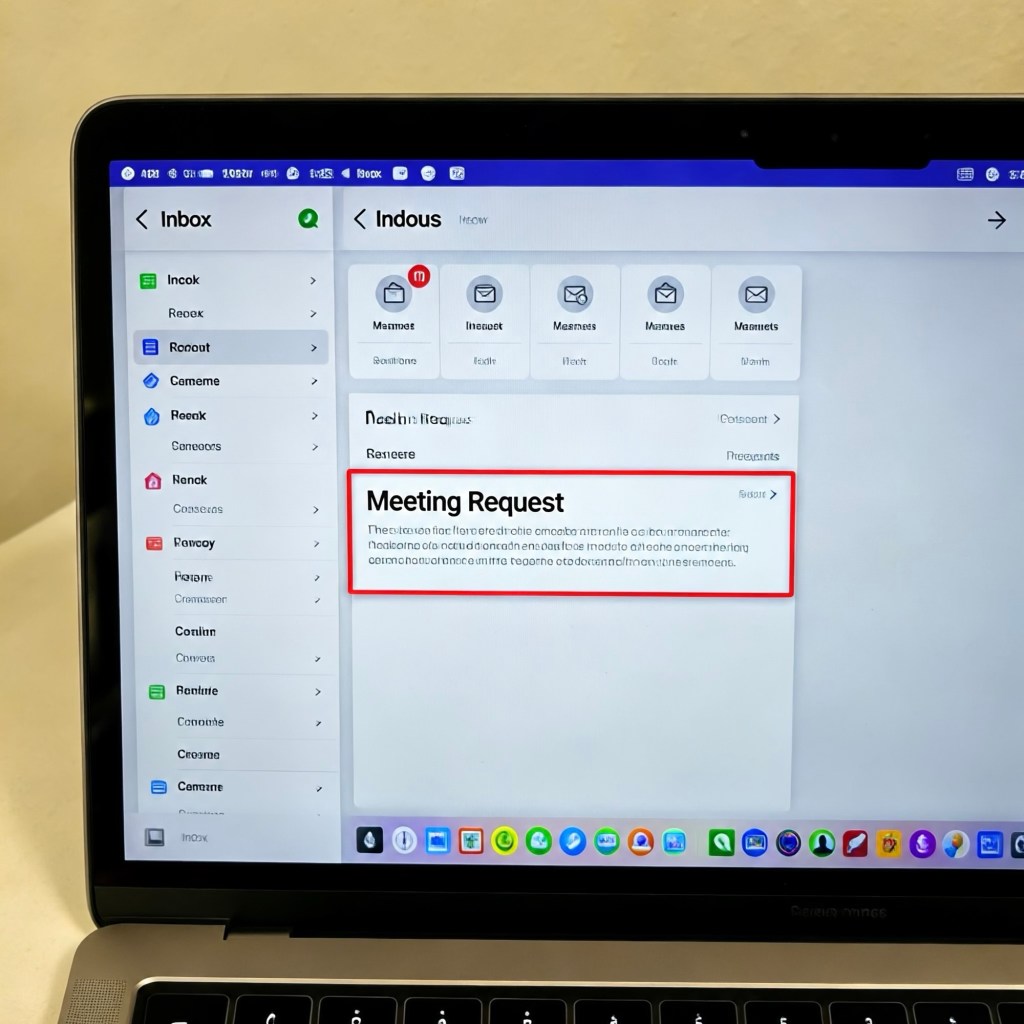
They are missing the actual architecture. Microsoft isn’t just updating an app; they are trying to swap out the engines of a 747 mid-flight because the original internet was built for connection, not security.
It wasn’t a mistake—it was pure engineering pragmatism. Engineers built the early internet to solve an immediate routing problem, and they did it brilliantly. For thirty years, enterprise IT treated an RFC 822 email address (user@domain.com) as a unique identifier. We conflated routing with authentication. A Primary SMTP address is a mail-routing attribute, not a cryptographic identity—yet we glued Active Directory, databases, and SaaS apps directly to it. Even worse, we built thick desktop clients like classic Outlook around stateful, legacy protocols (MAPI over HTTP, RPC, EWS, Basic Auth SMTP), massive local .ost/.pst caches, and unsandboxed COM add-ins executing right inside the local process space.
The problem isn’t that engineers did a bad job; it’s that tactical engineering has run the internet for far too long without theoretical systems thinkers in the room asking what happens when those shortcuts become the foundation of global identity.
- Engineers optimized for throughput, latency, and shipping the immediate solution. They build the bridge that holds today’s traffic. Yay and the bridge is crumbling.
- Theoretical systems thinkers look at emergent behavior, second-order consequences, and paradigm shifts. They ask what happens to the structural integrity of the entire ecosystem thirty years downstream when every single system treats a routing address as an identity primitive.
Modern cloud architecture had to decouple who you are from where your mail goes and what hardware you’re sitting at. In Microsoft Entra ID, your true unique identifier isn’t your email—it’s an immutable Object ID (GUID), separated from your User Principal Name (UPN). Instead of handing apps static passwords, clients exchange short-lived cryptographic claims (JWTs via OAuth 2.0 / OIDC), evaluated continuously against device compliance (Intune), Conditional Access, and CAE (Continuous Access Evaluation).

And here is what nobody talks about when they look at cloud abstraction and AI: we are building the Star Trek universal replicator.

In Star Trek, a replicator doesn’t keep a warehouse full of Earl Grey tea or self-sealing stem bolts. It stores the quantum-level pattern and uses raw energy to materialize the matter on demand.
In semiotic terms, legacy IT was obsessed with the physical hardware—the local server, the cached .pst file, the thick client bound to a specific machine. In modern cloud and machine learning architecture, the physical silicon—the GPUs, the racks, the cooling loops—is just part of the signifying chain, not the sign itself. The hardware is fungible commodity infrastructure. The signified—the actual value—lives in the shape of the data: the immutable graph topologies, the stateless REST calls against Microsoft Graph API, and the learned weights. Z We store the pattern, decouple the identity from the physical endpoint, and materialize the workspace on whatever glass screen happens to be in front of you.
That is why Outlook is struggling right now. Microsoft is finally forcing a hard architectural cutover—ripping out three decades of Win32/MAPI/COM technical debt and wrapping a stateless web client (WebView2 + Microsoft Graph) around Exchange Online while killing off EWS and Basic Auth.
And this brings us to the ultimate irony of the current tech cycle: they thought they could use AI to fix it.
Tech leadership is so convinced the underlying system is permanent that they created AI to automate their way out of the technical debt. That takes us straight back to the tension between structuralism and post-structuralism.
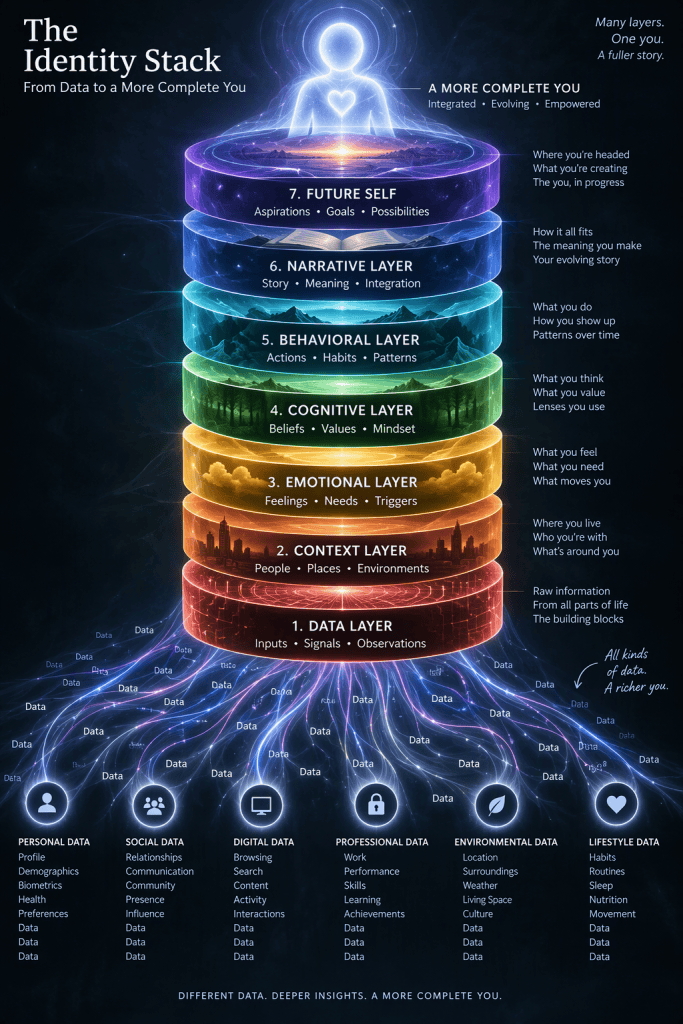
A Large Language Model or neural network is a purely structuralist engine. It operates entirely inside a closed system of signs, tokens, and statistical distributions. Because it is trained on the historical corpus of the system itself, it can optimize and rearrange the parts with superhuman speed—but it has no exteriority. As Derrida pointed out, you cannot critique a structure using only the tools generated by that structure without reproducing it. Every structure relies on an unexamined “center”—an assumption like “an email address is an identity”—that remains immune to interrogation from within. An AI trained on thirty years of legacy enterprise code doesn’t question the center; it canonizes it as mathematical probability.
How can anything within a system provide the epistemic distance needed to see not just the parts, but the whole?
It can’t. Engineers inside the codebase see latency and tickets. Models inside latent space see token weights. Neither can stand outside the frame and see that the entire paradigm has shifted. You cannot automate a paradigm shift from inside the parameters of the old paradigm—you need a human systems thinker willing to interrogate the center.




Leave a Reply